
Published: 10 February 2026 | Last updated: 13 October 2026
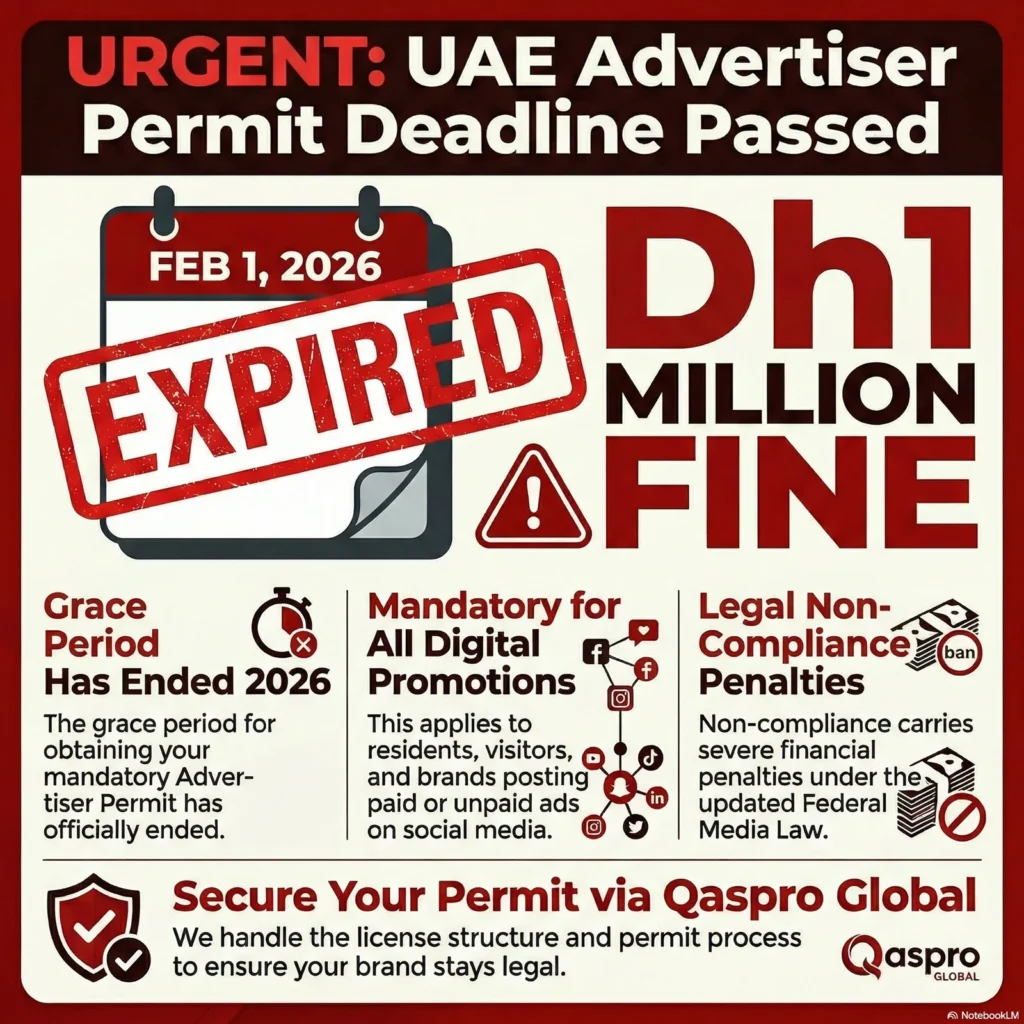
As of February 1, 2026, the UAE advertiser permit rule is now in force, affecting anyone who posts paid or sponsored content on social media. Under Federal Decree-Law No. 55 of 2023 on Media Regulation, with penalties set out in Cabinet Resolution No. 42 of 2025, all advertisers, whether individuals, influencers, or businesses, must obtain an advertiser permit from the UAE Media Council before publishing advertisements on digital platforms. There is good news for creators: the permit is free for its first three years (2026 to 2028) for UAE residents and citizens.
The permit is known officially as the Mu’lin advertiser permit. It is valid for one year for citizens and residents (renewable) and three months for visitors (renewable). The Media Council’s online services now sit under the National Media Authority, so the application portal address may redirect to eservices.nma.gov.ae.
This regulation applies across all social media channels including Instagram, TikTok, YouTube, Facebook, LinkedIn, and X (formerly Twitter). Whether you’re an influencer promoting a product, a business running ads, or an agency managing client campaigns, this rule now applies to you.
What the UAE Advertiser Permit Rule Says
According to the UAE Media Council, the regulation requires all individuals and entities engaged in advertising activities, including paid promotions, sponsored posts, affiliate marketing, and brand partnerships, to register and obtain an official advertiser permit. This permit must be obtained through the UAE Media Council’s digital platform before any paid content is published.
The law defines “advertising” broadly to include any content that promotes a product, service, brand, or idea in exchange for compensation, whether monetary or in-kind (such as free products or services).
Who Must Get an Advertiser Permit?
The permit requirement applies to a wide range of individuals and organizations:
- Influencers and content creators who receive payment or gifts for promoting products or services
- Businesses that advertise their own products or services on social media
- Marketing agencies managing advertising campaigns for clients
- Freelancers offering social media marketing services
- Brand ambassadors engaged in ongoing promotional relationships
- Affiliate marketers earning commissions through promotional content
If you are a foreign entrepreneur setting up a business in Dubai, advertising compliance should be part of your setup checklist from day one , especially if your business model involves digital marketing or social media promotion.
Key Rules and Requirements
- Permit Before Publishing: You must obtain your advertiser permit before posting any paid or sponsored content. Retroactive registration does not exempt you from penalties
- Clear Disclosure: All paid content must be clearly labeled as advertising or sponsored content. Hidden or undisclosed paid promotions violate the regulation
- Content Standards: Advertisements must comply with UAE public morals, not contain misleading claims, and respect intellectual property rights
- Record Keeping: Permit holders must maintain records of their advertising activities and be prepared to present them to authorities upon request
Exemptions from the Advertiser Permit
The exemptions are narrow. The scope covers advertising content that is paid or unpaid, so do not assume a free post is automatically outside the rule. Reported exemptions are:
- Personal accounts used to promote your own products or services (not third-party brands)
- Minors under 18 creating educational, cultural, sports or awareness content, under the relevant legislation
If you are unsure whether your account qualifies, treat it as requiring a permit and confirm with the Media Council before you publish.
Fines and Penalties for Non-Compliance
Penalties are set out in Cabinet Resolution No. 42 of 2025, under Federal Decree-Law No. 55 of 2023. Amounts reported from the Media Council’s published schedule:
| Violation | Fine (AED) |
|---|---|
| Advertising without a permit | 10,000 first offence; 40,000 repeat |
| Expired permit (not renewed) | 150 per day, capped at 3,000 |
| Misuse of a permit | 20,000 |
| Publishing false or misleading information | 5,000 to 10,000 |
| Content breaches | 5,000 to 1,000,000, depending on severity |
| Violations affecting state interests or national security | 50,000 to 500,000 |
The Council can also suspend or cancel a permit and require non-compliant content to be removed.
These penalties are separate from the broader compliance requirements UAE businesses face, such as the upcoming e-invoicing penalties under Cabinet Decision No. 106 of 2025. Businesses should review all regulatory frameworks together to understand their full exposure.
Impact on Businesses, Influencers, and Agencies
For Businesses: Companies must ensure their marketing teams and any influencers they partner with hold valid permits. Working with unregistered influencers could expose businesses to compliance risks. Marketing budgets should now account for permit fees and compliance costs.
For Influencers: Content creators who earn income from brand partnerships must formalize their status with the UAE Media Council. This also means treating influencer work as a legitimate business activity, which may have implications for trade licensing and taxation. Understanding your fiscal year alignment is essential for properly reporting advertising income under corporate tax.
For Agencies: Marketing agencies must verify that all parties in their campaigns, including freelance creators, are properly permitted. Contract terms should be updated to include compliance requirements.
How to Get an Advertiser Permit in UAE
The advertiser permit can be obtained through the UAE Media Council’s official portal:
- Creating an account on the UAE Media Council platform
- Submitting required documentation (Emirates ID, passport, and a valid trade licence covering electronic media for residents and citizens). Applicants must be 18 or older with no prior media violations
- Visitors cannot apply directly: they must be registered with a UAE-licensed, Council-accredited advertising or talent agency, which applies for the three-month visitor permit
- Paying the applicable permit fee (waived for UAE residents and citizens for the first three years, 2026 to 2028)
- Waiting for approval (processing times vary)
- Receiving your official advertiser permit
Frequently Asked Questions
Do I Need an Advertiser Permit to Post on Instagram in UAE?
Yes, if the content is paid or sponsored. Any post that promotes a product, service, or brand in exchange for compensation (money, free products, or services) requires an advertiser permit from the UAE Media Council. The rule covers paid or unpaid advertising content, so only genuinely personal posts, or posts promoting your own products or services, fall outside it.
What Is the Fine for Advertising Without a Permit in UAE?
Penalties escalate with the severity of the violation and can reach up to AED 1,000,000 (one million dirhams) under Cabinet Resolution No. 42 of 2025. Additional consequences include content removal, license suspension, and potential criminal liability for serious or repeated violations.
How Much Does the UAE Advertiser Permit Cost?
The advertiser permit is free for its first three years (2026 to 2028) for UAE residents and citizens. You may still need a valid trade or freelancer licence in place first, which carries its own separate cost.
Do Small Businesses Need an Advertiser Permit?
Yes. The regulation applies to all businesses, regardless of size, that post paid or sponsored content on social media. Even a small business promoting its own products through paid social media ads must obtain the permit.
Is a Trade License Required to Get an Advertiser Permit?
A trade license may be required depending on the nature of your advertising activities. Individual influencers may need to obtain a freelancer license or media activity license in addition to the advertiser permit. If you are a foreign national, our guide to starting a business in Dubai as a foreigner covers the licence options and costs from AED 5,750.
Does the Permit Apply to YouTube Content?
Yes. The regulation covers all digital platforms, including YouTube, Instagram, TikTok, Facebook, LinkedIn, and X. Sponsored videos, product reviews with compensation, and affiliate marketing content all require a valid advertiser permit.
How Qaspro Global Can Help
Navigating new regulations can be challenging, especially when they intersect with business licensing, taxation, and media compliance. At Qaspro Global, we provide comprehensive support:
- Trade License Guidance: If you’re an influencer or digital marketer, you may need a proper trade license to operate legally. We help you choose the right license type and jurisdiction
- Permit Application Support: Our team guides you through the advertiser permit application process
- Compliance Review: We review your current marketing activities to identify compliance gaps
- Tax Planning: Income from advertising activities may be subject to corporate tax. Our tax consultants help you structure your business efficiently
Stay compliant with UAE advertising regulations. Contact Qaspro Global today to ensure you’re operating within the law.
Related Reading
- Business Setup in Dubai: Complete Guide 2026
- Mainland vs Free Zone Dubai 2026: Complete Comparison
- UAE VAT Registration 2026: Step-by-Step Guide
- Corporate Tax Registration UAE 2026: Step-by-Step Guide
- UAE Tax Deadlines 2026: Every Date Your Business Must Know
- How to Choose a Tax Consultant in Dubai 2026
- Why Hire a Tax Consultant Before an FTA Audit
- PRO Services Dubai: What’s Included and Cost 2026
- Golden Visa UAE: Cost Breakdown 2026
- Monthly Bookkeeping Checklist for UAE Businesses
- Accounting Software for UAE Businesses 2026
- UAE Financial Year: Everything You Need to Know
Founder & CEO, Qaspro Global — UAE tax expert with 16+ years of experience in VAT, corporate tax and FTA audit support.