

Published: 13 September 2026
Ras Al Khaimah International Corporate Centre, known as RAK ICC, is the UAE’s main offshore company registry. It is not a free zone you can walk into, rent a desk in, and get a visa from. It is a corporate registry that lets a foreign or UAE-resident investor own a UAE-registered legal entity used for holding assets, international trading, invoicing, or owning property, without a physical UAE presence and without staff. This guide covers what RAK ICC actually costs in 2026, how the setup process works, who it genuinely suits, and the corporate tax question almost every applicant asks wrong: does “offshore” mean tax-free? It does not automatically.
Quick Answer
A RAK ICC offshore company costs from AED 3,250 for the first year in pure RAK ICC registry fees (International Business Company incorporation, one-year validity), rising to AED 6,700 for two years and AED 9,600 for three years, with annual renewal at AED 3,950. These are government registry fees only. You cannot apply directly: every RAK ICC company must be incorporated and maintained through a licensed registered agent, whose own service fee (typically AED 2,500 to AED 5,000 a year, on top of the registry fee) is not fixed by RAK ICC and varies by provider. A RAK ICC company cannot hold a UAE residence visa, cannot rent office space and operate from it, and cannot trade directly with the UAE mainland market. Its profit is not automatically 0% for UAE Corporate Tax purposes: an offshore company with no UAE staff and no UAE premises does not qualify as a Qualifying Free Zone Person, so its income is generally taxable at the standard 9% rate above the AED 375,000 threshold, unless a specific exemption applies.
What RAK ICC Actually Is
RAK ICC was formed in 2016 when Ras Al Khaimah merged its two earlier offshore registries, RAK International Companies (RAK IC) and RAK Offshore, into one. It registers International Business Companies (IBCs), Foundations, and Segregated Portfolio Companies (SPCs). It sits under the Government of Ras Al Khaimah and is administratively separate from RAKEZ (Ras Al Khaimah Economic Zone), which is a different entity entirely. This distinction trips people up constantly: RAKEZ is an onshore free zone with physical offices, warehouses, and visa quotas, built for companies that actually operate inside the UAE. RAK ICC is an offshore registry for companies that do not operate inside the UAE at all. If your business needs a UAE office, staff, or visas, RAK ICC is the wrong vehicle and RAKEZ or another onshore free zone is the right one; our RAKEZ free zone guide covers that onshore option in full.
RAK ICC Official Fee Schedule 2026
The figures below are from RAK ICC’s own fee schedule effective 1 January 2026. Always confirm current fees with your registered agent before applying, since RAK ICC updates this schedule periodically.
| Item | 1 Year | 2 Years | 3 Years |
|---|---|---|---|
| IBC incorporation | AED 3,250 | AED 6,700 | AED 9,600 |
| IBC renewal | AED 3,950 | AED 7,250 | AED 10,650 |
Additional government charges that may apply depending on your structure:
| Structure or amendment | Government fee |
|---|---|
| Segregated Portfolio Company (SPC), per portfolio (up to 10) | AED 1,500 |
| Foundation registration | AED 1,500 |
| Foundation renewal | AED 1,500 |
| Foundation annual licence | AED 750 |
| Authorised share capital amendment | AED 750 |
| More than 3 shareholders/directors, per extra individual | AED 200 |
| More than 3 shareholders/directors, per extra corporate entity | AED 400 |
| Two levels of corporate shareholders | AED 1,250 |
| Three or more levels of corporate shareholders | AED 1,750 |
There is no minimum share capital requirement for a RAK ICC IBC, though your constitutional documents will still record an authorised share capital figure.
The registered agent fee is separate, and it is usually the bigger number
This is the part vendor marketing tends to blur. RAK ICC’s fee schedule fixes what the government charges. It does not fix what your registered agent charges you for handling the application, drafting documents, providing the registered office address, and ongoing compliance. Registered agents typically charge AED 2,500 to AED 5,000 a year on top of the government fee, and this is genuinely variable between providers, so get a written quote before committing. You cannot register a RAK ICC company yourself; only an agent licensed by RAK ICC can submit the application, hold your company’s registered office, and act as the compliance point of contact going forward.
One figure that circulates inaccurately in vendor content: AED 12,500. This is what a registered agent itself pays RAK ICC to be licensed and to renew that licence annually. It is not a company renewal fee, and no legitimate provider should be charging you AED 12,500 as your company’s annual renewal, since RAK ICC’s actual IBC renewal fee is AED 3,950 for one year.
What a RAK ICC Company Can and Cannot Do
Allowed:
– Holding shares in other companies (holding company structure)
– Owning UAE real estate, subject to the specific freehold areas RAK ICC permits offshore ownership in
– International trading and invoicing between parties outside the UAE
– Owning intellectual property, vessels, and other assets
– Opening a UAE corporate bank account (subject to the bank’s own due diligence and approval, which has become noticeably stricter for offshore entities in recent years)
– Acting as a holding vehicle in an international group structure
Not allowed:
– Conducting business inside the UAE mainland market
– Renting or occupying physical office space and operating a business from it
– Sponsoring UAE residence visas for owners, directors, or staff
– Carrying out banking, insurance, or other regulated financial activities without separate licensing
– Employing staff under a UAE labour contract
If your plan involves a physical office, staff on visas, or trading with UAE mainland customers, you need an onshore free zone or mainland licence instead, not a RAK ICC offshore company. See our mainland vs free zone comparison if you are unsure which fits your plan. And once you do sponsor staff on an onshore visa, remember that visa comes with its own compliance layer: our partner site Yalah Dubai has a full breakdown of mandatory UAE health insurance rules for residence visa holders.
Setup Process and Timeline
- Engage a licensed registered agent. This step cannot be skipped; RAK ICC does not accept direct applications from individuals or unlicensed intermediaries.
- Choose your structure. Most applicants use a standard IBC. A Foundation suits succession/estate planning; an SPC suits managing multiple ring-fenced portfolios (funds, real estate holdings) under one legal entity.
- Submit KYC documents. Passport copies, proof of address, and for corporate shareholders, the parent company’s incorporation documents and good-standing certificate.
- Name approval and application submission. Your agent submits the application and draft constitutional documents to RAK ICC.
- Certificate of Incorporation issued. Standard processing is 2 to 4 business days; urgent same-day processing is available for complete applications received before 12:00 noon, though this does not apply to agent registration, liquidation, or re-domiciliation applications.
- Open a bank account (optional but usually the goal). This is handled separately from incorporation and depends entirely on the bank’s own compliance review of an offshore structure; expect this step to take longer than the incorporation itself.
RAK ICC and UAE Corporate Tax: The Question Most Guides Get Wrong
This is the section to read carefully before assuming “offshore” means “tax-free.” It does not, automatically.
UAE Corporate Tax applies to all UAE-incorporated entities, including RAK ICC companies, unless a specific exemption applies. The 0% rate that free zone companies can access is reserved for a Qualifying Free Zone Person (QFZP) under Article 18 of the Corporate Tax Law, and QFZP status has real substance conditions: adequate UAE staff, UAE premises, and core income-generating activities actually carried out from the UAE, per Ministerial Decision No. 139. A RAK ICC offshore company, by design, has no UAE staff and no UAE premises, because those are exactly the things it is not permitted to have. That means it typically cannot meet the substance test and cannot be treated as a QFZP, so its taxable income is generally subject to the standard 9% Corporate Tax rate above the AED 375,000 profit threshold, the same as any other non-qualifying UAE company.
There is no blanket exemption for “offshore” or “foreign-sourced” income just because the company sits in an offshore registry. The Federal Tax Authority requires disclosure of all income, including foreign-sourced income, at registration and in the annual return, and omitting it is treated as a compliance failure with real penalty exposure, not a grey area.
In practice, this means:
– Your RAK ICC company must still register with the FTA for Corporate Tax, regardless of its offshore status, unless it qualifies for a specific exemption (for example, certain qualifying investment funds or government-related structures).
– It must file an annual Corporate Tax return, within 9 months of its financial year end.
– Profit above AED 375,000 is generally taxed at 9%, unless the company qualifies for Small Business Relief (available where revenue is below the relief’s own threshold) or another specific relief.
– “Offshore” changes where the company sits in the UAE’s corporate registry system. It does not, by itself, change its Corporate Tax exposure.
For the qualifying activities and substance conditions that DO unlock 0% for onshore free zone companies (which a RAK ICC offshore entity cannot access), see our guide to UAE free zone qualifying activities under Ministerial Decision 229 and Qualifying Free Zone Person status. If you are weighing a RAK ICC offshore company against an onshore option specifically for tax reasons, get that analysis in writing from a registered tax agent before you incorporate, not after. Our overview of UAE offshore company setup compares RAK ICC against JAFZA Offshore and Ajman Offshore if you are still deciding which offshore jurisdiction fits.
RAK ICC vs RAKEZ vs Onshore Free Zone
| Feature | RAK ICC (offshore) | RAKEZ / onshore free zone |
|---|---|---|
| Physical UAE office | Not permitted | Required or optional depending on package |
| UAE residence visas | Not available | Available, tied to office/flexi-desk package |
| Trade with UAE mainland | Not permitted | Permitted (with distributor/agent for some activities) |
| Corporate Tax 0% eligibility | Generally no (fails substance test) | Possible if QFZP conditions are met |
| Typical use case | Holding company, asset ownership, international invoicing | Operating business with staff and UAE-based activity |
| Setup cost (government fee) | From AED 3,250 (1 year) | Varies by free zone and package |
Who RAK ICC Actually Suits
- An investor consolidating shares in several operating companies under one holding entity
- A family or individual holding UAE real estate through a corporate structure rather than personal name
- An international trading business that invoices between two foreign counterparties and does not need a UAE operating presence
- Someone building a Foundation for succession or asset-protection planning
- A fund manager needing a Segregated Portfolio Company to ring-fence multiple portfolios legally
It does not suit anyone who needs to work from the UAE, sponsor their own or staff visas, or sell directly into the UAE mainland market. For those cases, compare business setup in Dubai options or a specific free zone like DMCC or IFZA instead.
Frequently Asked Questions
Can I register a RAK ICC company myself without an agent?
No. RAK ICC only accepts applications submitted through a licensed registered agent. You cannot apply directly as an individual or through an unlicensed intermediary.
Can a RAK ICC offshore company get me a UAE residence visa?
No. RAK ICC companies cannot sponsor residence visas for owners, directors, or staff. If a visa is part of your goal, you need an onshore free zone or mainland company instead.
Does a RAK ICC company pay UAE Corporate Tax?
Generally yes, on profit above AED 375,000, at the standard 9% rate, since it typically cannot meet the substance conditions required for Qualifying Free Zone Person status and its 0% rate. It must still register with the FTA and file annual returns unless a specific exemption applies.
How much does RAK ICC company formation actually cost in year one?
The RAK ICC government registry fee for a one-year IBC is AED 3,250. Your registered agent will add its own service fee on top, typically AED 2,500 to AED 5,000, so budget a total first-year cost of roughly AED 5,750 to AED 8,250 before bank account fees.
What is the difference between RAK ICC and RAKEZ?
RAK ICC is an offshore company registry with no physical presence, staff, or visas. RAKEZ is an onshore free zone where companies can lease office or warehouse space, hire staff, and sponsor visas. They are separate entities under the Ras Al Khaimah government.
Can a RAK ICC company own property in Dubai or Ras Al Khaimah?
Yes, subject to the specific freehold areas that permit offshore company ownership. Confirm the eligible areas with your registered agent and the relevant land department before purchasing, since not every freehold zone accepts offshore corporate buyers.
How long does RAK ICC incorporation take?
Standard processing issues a Certificate of Incorporation in 2 to 4 business days. Urgent same-day processing is available for complete applications submitted before 12:00 noon, except for agent registration, liquidation, and re-domiciliation applications.
Can I open a bank account for my RAK ICC company easily?
Not automatically. Banks apply their own, often stricter, due diligence to offshore entities than to onshore operating companies. Expect the bank account process to take longer than the incorporation itself, and expect to provide substance documentation about the company’s real ownership and purpose.
Is there a minimum share capital for a RAK ICC company?
No statutory minimum, though your constitutional documents will record an authorised share capital figure that your registered agent will help you set appropriately for your structure.
Can a RAK ICC offshore company trade directly with UAE mainland customers?
No. Trading into the UAE mainland market is outside what an offshore company is licensed to do. If mainland trade is part of your plan, you need a mainland licence or an onshore free zone company with the appropriate distribution arrangement.
Related Reading
-
UAE Mandatory Health Insurance for Residence Visa 2026 (Yalah Dubai)
- RAKEZ Free Zone Setup 2026
- Qualifying Free Zone Person (QFZP) Under UAE Corporate Tax
- Mainland vs Free Zone in Dubai
- Business Setup in Dubai 2026
Talk to a Registered Tax Agent Before You Incorporate
An offshore structure that looks simple on a vendor’s pricing page can create real UAE Corporate Tax and compliance obligations you did not plan for. Qaspro Global’s FTA-registered tax agents can review your specific structure, confirm your actual Corporate Tax exposure, and help you register correctly from day one. Message us on WhatsApp to talk through your setup before you sign an agent agreement.
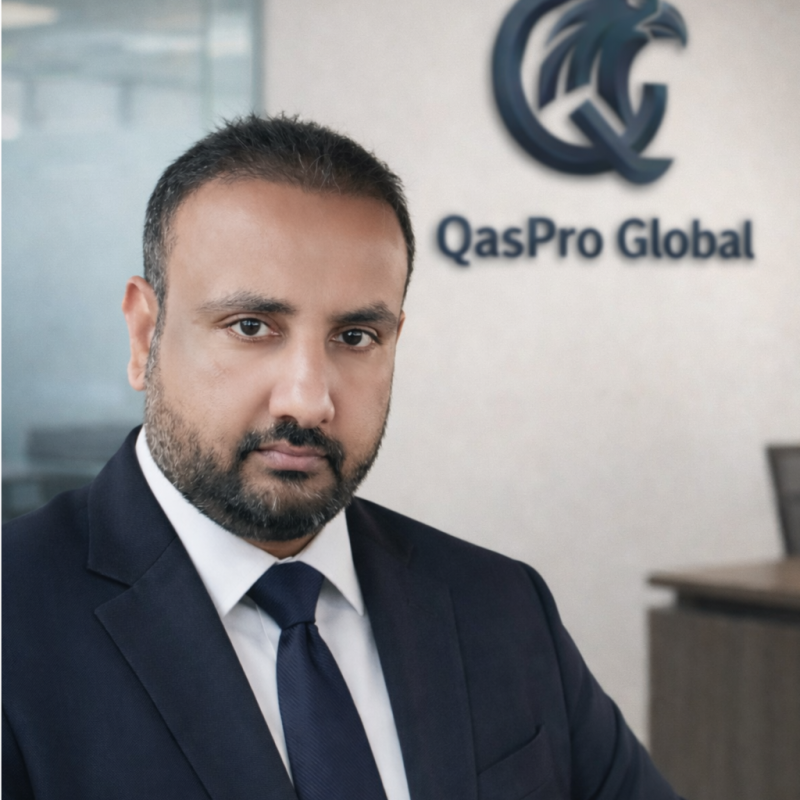
Founder & CEO, Qaspro Global — UAE tax expert with 16+ years of experience in VAT, corporate tax and FTA audit support.