

Quick answer: For most mainland commercial and industrial activities, you do not need any UAE national sponsor at all anymore. Federal Decree-Law No. 26 of 2020, amending the Commercial Companies Law, opened 100% foreign ownership for the vast majority of mainland LLC activities starting 1 June 2021. A local sponsor is still required only for a short, Cabinet-defined list of “strategic impact” activities and for professional/civil-company licenses that use a Local Service Agent instead of a shareholder. If your activity does fall into one of those categories, a corporate sponsor (a licensed service company bound by a written agreement) is structurally safer than an individual sponsor, because the company’s obligations survive staff changes, disputes, and personal circumstances that would otherwise leave your business exposed.
Published: 27 September 2026
Most guides on this topic still assume every mainland company needs a 51% UAE national partner. That assumption stopped being true for most businesses more than four years ago, and outdated advice is now the single biggest reason founders overpay for a sponsorship structure they do not legally need. This article covers what actually changed, who still needs a sponsor, and if you do, why the individual-versus-corporate choice matters more than most people are told before they sign anything.
What Changed: 100% Foreign Ownership on the Mainland
Direct answer: Federal Decree-Law No. 26 of 2020, which amended the UAE Commercial Companies Law (Federal Law No. 2 of 2015), removed the default requirement that a UAE national or a wholly UAE-owned company hold at least 51% of a mainland LLC’s shares. The amendment took effect on 1 June 2021.
Before that date, almost every mainland limited liability company needed a UAE national shareholder holding the majority stake, regardless of who actually ran or funded the business. After the amendment, individual emirates and their Departments of Economic Development were authorised to determine which activities still require Emirati participation, and the default position shifted to 100% foreign ownership for commercial, industrial, and most professional activities carried out through an LLC.
This is the reform that ended the traditional “51/49 local sponsor” arrangement for the majority of new mainland setups. If you are being quoted a local sponsor purely to hold shares in a standard trading, consulting, or industrial LLC, ask directly why your specific activity is not covered by the 100% ownership reform, since for most activities it now is. See our breakdown of how mainland licensing itself works in UAE mainland company setup if you have not yet chosen a legal form.
When a Sponsor Is Still Legally Required in 2026
Direct answer: only two situations still involve a sponsor-type relationship: (1) a narrow, Cabinet-published list of “strategic impact” activities where Emirati shareholding remains mandatory, and (2) professional and civil-company licenses (and foreign branch offices) that are 100% owned by the founder but must appoint a Local Service Agent, who holds no shares at all.
Strategic impact activities. Certain sectors tied to security, defence, and specific regulated industries remain excluded from the 100% ownership reform under Cabinet-level decisions, and companies in those sectors still need a UAE national or wholly UAE-owned entity to hold at least 51%. These activities are a small, specific list, not the general rule, and DED authorities confirm activity-by-activity eligibility at licensing stage.
Professional and civil-company licenses. A sole establishment or civil company (used for consultancies, legal practices, medical practices, and similar professional activities) can already be 100% owned by the foreign founder. What it still needs, in most emirates, is a Local Service Agent: a UAE national individual or a UAE-owned company that helps with government-facing administrative tasks (visa processing, license renewals, liaising with authorities) in exchange for a fixed annual fee. The Local Service Agent has no ownership stake, no profit share, and no say in how the business is run. This is legally a service contract, not a shareholding. The visa and Emirates ID paperwork an agent helps with is actually submitted through government typing centres, and our sister site Yalah Dubai explains which typing centre handles what in Dubai, ICP or GDRFA.
Foreign branch offices. A branch of a foreign parent company operating on the mainland also typically appoints a Local Service Agent rather than a shareholder, for the same reason: the branch remains 100% owned by the foreign parent.
If your intended activity is not on the strategic list and you are not registering as a sole establishment, civil company, or foreign branch, you likely do not need a sponsor of either kind. Confirm your specific activity code with your chosen emirate’s Department of Economic Development before paying for any sponsorship arrangement.
Individual Sponsor vs Corporate Sponsor: The Real Difference
Direct answer: an individual sponsor is one named person, whose availability, health, business relationships, and personal decisions directly affect your license; a corporate sponsor is a licensed company bound by a formal, renewable service agreement, so continuity does not depend on any single person staying reachable or cooperative.
| Factor | Individual (Local) Sponsor | Corporate Sponsor |
|---|---|---|
| Who you are legally tied to | One named UAE national | A licensed service company |
| What happens if they are unreachable | Business operations can stall (signatures, renewals, NOCs) | Company assigns a substitute contact; obligations continue |
| What happens if they pass away or become incapacitated | Agreement effectively lapses; heirs may dispute or renegotiate terms | Company continues independently of any one employee |
| Contract enforceability | Personal agreement; harder to enforce against an individual who disengages | Corporate agreement; company remains liable as an entity |
| Typical structure used | Common historically for 51/49 mainland LLCs and some LSA arrangements | Increasingly used for Local Service Agent roles and any remaining strategic-activity shareholding |
| Renewal and administration | Depends on personal relationship and goodwill | Handled through the company’s standard client servicing process |
The practical risk with an individual sponsor is not that most sponsors act in bad faith. It is that a single person’s circumstances (relocation, illness, a falling-out, a change in their own priorities) can create a real operational gap for your business with no institutional backstop. A corporate sponsor spreads that risk across an organisation with its own licensing obligations to maintain, which is why founders who still need a sponsor (under either of the two situations above) generally get stronger continuity from a corporate structure than an individual one.
What a Local Service Agent Agreement Should Include
Direct answer: a properly drafted Local Service Agent Agreement should state clearly that the agent holds no shares, no profit entitlement, and no management authority, and should fix the annual service fee, the scope of administrative services covered, the notice period for either party to exit, and what happens to pending government transactions if the agreement ends.
Founders who still need a Local Service Agent (professional licenses, civil companies, foreign branches) should check the agreement covers:
- No ownership language. The agreement should explicitly confirm the agent has zero equity, profit share, or asset claim in the business, consistent with the Commercial Companies Law’s treatment of the LSA role as a service arrangement, not a partnership.
- Fixed, defined fee. The agent’s compensation should be a fixed annual amount stated in the agreement, not a percentage of revenue or profit, since a profit-linked fee blurs the line into an ownership-like arrangement.
- Defined scope of services. What the agent actually does (license renewals, visa processing assistance, liaising with government departments) should be listed, not left as a vague “general assistance” clause.
- Exit and notice terms. A clear notice period for either party to terminate, and a defined handover process for any government transaction that is mid-process at termination.
- No signing authority over bank accounts or contracts. The agent’s role is administrative liaison, not financial or contractual control.
- Dispute resolution clause. Which UAE court or arbitration process applies if a disagreement arises.
Red Flags to Check Before Signing Any Sponsorship Agreement
Direct answer: treat any request for profit-sharing, signing authority over your bank account, undocumented “goodwill” side payments, or a verbal-only arrangement as a serious warning sign, since none of these are consistent with a lawful Local Service Agent or Cabinet-mandated shareholding structure.
- Profit-percentage fees for an LSA role. A Local Service Agent is not a shareholder and should not be paid a share of profit; that structure resembles a disguised ownership stake.
- No written agreement, or a one-page generic template. Every sponsorship or LSA relationship should have a specific, reviewed agreement, not a boilerplate document copied for every client.
- Sponsor holds signing authority on your operating bank account. This gives a non-owner practical control your license structure does not intend them to have.
- Pressure to pay multiple years upfront with no exit clause. A fair agreement includes a notice period; an agreement designed to lock you in with no exit is a risk signal.
- Sponsor is unreachable during due diligence. If you cannot verify who the individual or company actually is, or they avoid a call before signing, do not proceed.
- Being told a sponsor is required when your activity is on the 100% ownership list. Verify your specific activity code with the relevant DED before accepting any sponsorship cost.
Corporate Sponsor Continuity: Why It Matters Long-Term
Direct answer: a corporate sponsor’s continuity comes from the fact that its Local Service Agent or shareholding obligation is tied to the company’s own trade license, not to any one employee, so a staff departure, retirement, or internal reorganisation at the sponsor company does not automatically disrupt your business’s government-facing processes.
For businesses in a strategic-activity sector that must maintain Emirati shareholding, or professional licenses that must maintain a Local Service Agent, this continuity difference compounds over years. A five-year or ten-year relationship with an individual sponsor depends on that one person’s life staying stable and their intentions staying aligned with yours the entire time. A corporate sponsor’s obligations are contractual and institutional, which is a materially different risk profile when your license renewal, visa quota, and government correspondence all run through that relationship every year.
How This Fits Into Your Wider Mainland Setup Decision
If you are still deciding between a mainland and free zone structure before this sponsorship question even applies, see our comparison of mainland vs free zone in Dubai and the tax-specific breakdown in mainland vs free zone tax treatment. If you have already chosen mainland and are working through the wider cost and document checklist, our guides on Dubai business setup costs and documents needed for business setup cover the rest of the process. Once your company is licensed, note that director and shareholder payment structures also affect your Corporate Tax position, covered in UAE Corporate Tax on director and shareholder payments.
Frequently Asked Questions
Do I need a local sponsor for a mainland LLC in Dubai in 2026?
For most commercial, industrial, and professional LLC activities, no. Federal Decree-Law No. 26 of 2020 opened 100% foreign ownership for the majority of mainland activities from 1 June 2021. A sponsor-type arrangement is still required only for a narrow Cabinet-defined list of strategic activities, and a Local Service Agent (not a shareholder) is still used for sole establishments, civil companies, and foreign branches.
What is the difference between a shareholder sponsor and a Local Service Agent?
A shareholder sponsor (still required only for strategic-activity companies) holds actual equity and, historically, majority ownership. A Local Service Agent holds no shares, no profit share, and no management authority. They are paid a fixed annual fee for administrative liaison services only.
Can a company act as my Local Service Agent instead of an individual?
Yes. A UAE-owned company can act as a Local Service Agent in place of an individual UAE national, and this corporate route generally offers stronger continuity since the obligation is tied to the company’s license rather than one person’s availability.
What happens if my individual sponsor becomes unreachable?
Government transactions that require the sponsor’s cooperation, such as certain renewals or NOCs, can stall until the relationship is resolved, replaced, or renegotiated, which can take significant time and legal effort depending on the specific agreement in place.
Is a Local Service Agent allowed to take a percentage of my profits?
No. A Local Service Agent’s compensation should be a fixed fee defined in the agreement, not a profit share. A profit-linked arrangement is inconsistent with the LSA role and should be treated as a red flag.
Which activities still require a UAE national shareholder in 2026?
Only activities on the Cabinet-published “strategic impact” list, which covers a small number of security- and defence-related and other specifically regulated sectors. Confirm your exact activity code’s status with your emirate’s Department of Economic Development before assuming you need a sponsor.
Does a free zone company need a local sponsor?
No. Free zone companies have always allowed 100% foreign ownership within their free zone jurisdiction; the local sponsor question applies specifically to mainland licensing.
Can I switch from an individual sponsor to a corporate sponsor later?
In most cases yes, subject to your existing agreement’s exit terms and the relevant authority’s process for updating the Local Service Agent or shareholder record on your license. Review your current agreement’s notice period before starting the switch.
Does a Local Service Agent need to be involved in daily operations?
No. The agent’s role is limited to administrative liaison with government departments; they have no say in daily management, hiring, contracts, or financial decisions.
Where is the “strategic impact” activities list published?
It is issued through UAE Cabinet decisions and applied by each emirate’s Department of Economic Development at licensing stage. Since the list can be updated, always confirm your specific activity’s current status directly with the DED rather than relying on older listings.
Related Reading
- ICP vs GDRFA Typing Centers in Dubai 2026 (Yalah Dubai)
- UAE Mainland Company Setup 2026
- Mainland vs Free Zone Dubai 2026
- Mainland vs Free Zone Tax UAE 2026
- Dubai Business Setup Costs 2026
- Documents Needed for Business Setup in Dubai
- UAE Corporate Tax on Director and Shareholder Payments
Get Your Sponsorship Structure Reviewed Before You Sign
Choosing the wrong sponsorship structure, or signing an agreement missing the protections above, is far harder to fix after your license is issued than before. Qaspro Global reviews Local Service Agent agreements and mainland ownership structures before you commit, and can confirm whether your specific activity actually requires a sponsor at all. WhatsApp us at +971 55 153 9679 to have your activity code and draft agreement checked.
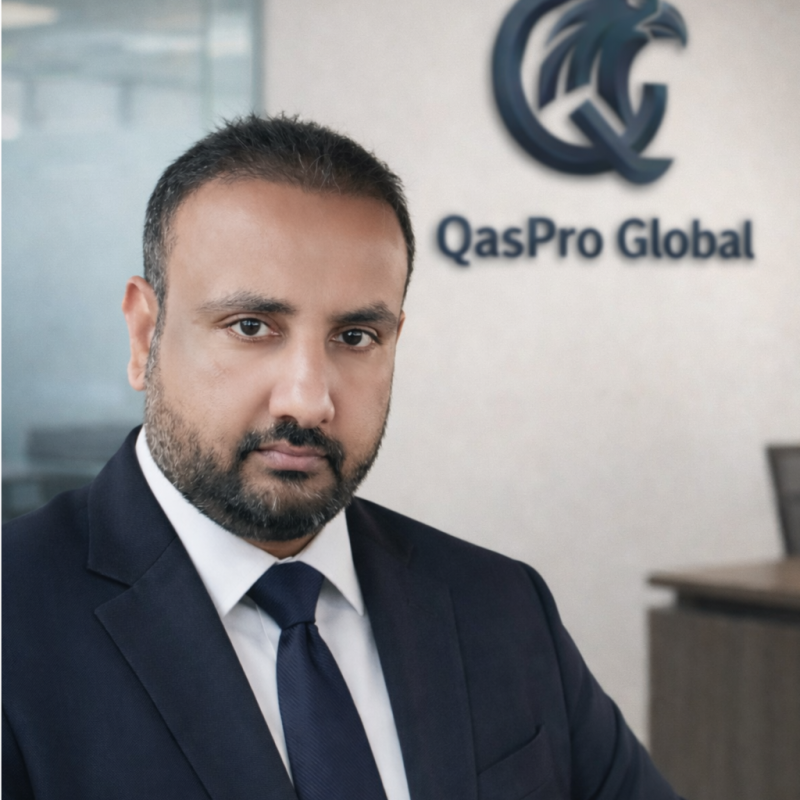
Founder & CEO, Qaspro Global — UAE tax expert with 16+ years of experience in VAT, corporate tax and FTA audit support.