

Published: 19 September 2026
Dubai Internet City (DIC) is the free zone where a large share of the world’s technology and media companies run their Middle East operations from, alongside thousands of smaller software, IT services, and digital businesses. If you are choosing a free zone for a tech, software, or digital services company in 2026, DIC is almost certainly on your shortlist, but the setup cost, license type, and Corporate Tax outcome all depend on details most guides skip over.
Quick answer: Dubai Internet City is a TECOM Group free zone for technology, IT, and digital media businesses. It issues Commercial, Service, and Industrial/Innovation licenses, ties visa quota to office or flexi-desk size, and companies formed there can qualify for the UAE’s 0% Qualifying Free Zone Person (QFZP) Corporate Tax rate on Qualifying Income, provided their actual activity falls inside the Qualifying Activities list and they meet the substance and de minimis conditions.
What Is Dubai Internet City?
Dubai Internet City is one of several free zones operated under TECOM Group, alongside Dubai Media City, Dubai Knowledge Park, Dubai Science Park, and Dubai Silicon Oasis. Where Dubai Silicon Oasis leans toward semiconductor design, hardware, and electronics manufacturing, DIC is built specifically for software, IT services, telecom, and digital media companies. It is home to regional offices of major global technology firms as well as a large base of SME and startup licensees working in software development, IT consulting, cloud services, and tech distribution.
Because DIC sits inside Dubai, companies formed there fall under Dubai’s free zone regulatory framework and, for Corporate Tax purposes, under the UAE’s federal free zone regime that applies to every Free Zone Person in the country, not a DIC-specific tax rule.
DIC License Types in 2026
DIC issues three main categories of license, and picking the right one determines what your company is legally permitted to do:
- Commercial License: for companies trading in technology hardware, software licenses, or related products, including import, export, and distribution of IT and telecom equipment.
- Service License: for companies providing IT services, software development, consulting, systems integration, managed services, and similar professional or technical services. Most software and digital-services startups in DIC operate under this license.
- Industrial/Innovation License: for companies engaged in light manufacturing, assembly, or R&D-driven production of technology products, including hardware prototyping and innovation-lab activity.
Some businesses need more than one activity across these categories; DIC, like most TECOM zones, allows multiple related activities to be added to a single license where the activities are compatible, which avoids the cost of holding two separate licenses for a genuinely single business.
Setup Cost and Renewal
DIC publishes its own license and facility fee schedule through TECOM Group, and the total setup cost for any individual company depends on the license type chosen, the number of activities and visas required, and whether the company takes a flexi-desk, shared office, or dedicated office space. Because these published fees are revised periodically, treat any number you see quoted online as indicative only and confirm the current fee schedule directly with DIC/TECOM or a licensed setup consultant before budgeting.
What stays broadly consistent year to year is the fee structure itself:
| Cost component | What it covers |
|---|---|
| Trade license fee | Annual registration and license issuance for the chosen activities |
| Facility/office fee | Flexi-desk, shared workspace, or dedicated office, priced by size and type |
| Establishment card fee | Required for visa processing under the company |
| Visa fees (per visa) | Entry permit, status change, medical test, Emirates ID, and residence visa stamping |
| Name reservation and initial approval | One-time fees at the start of registration |
Renewal each year covers the license fee and facility fee again, plus any visa renewals due that year. Late renewal typically triggers a grace period followed by fines, so companies should track their license expiry date the same way they track visa expiry dates.
Visa Allocation
DIC ties the number of employment visas a company can sponsor to the size and type of the workspace it holds, not to the license category alone. A flexi-desk or shared-desk package allows a limited number of visas (commonly a small handful), while a dedicated office allocates visas based on floor area, following DIC’s own visa-to-space ratio. Companies that expect to grow headcount quickly should budget for a larger office package from the start rather than repeatedly upgrading, since each upgrade involves its own facility and amendment fees.
Setup and Registration Process
- Choose activities and license type: confirm whether your business fits Commercial, Service, or Industrial/Innovation, and list every activity you need on the license.
- Reserve a trade name and get initial approval: DIC checks the proposed name against naming rules and confirms the activities are permitted in the zone.
- Submit incorporation documents: passport copies of shareholders/directors, a business plan or activity description, and, for corporate shareholders, attested incorporation documents.
- Sign the lease/facility agreement: flexi-desk, shared office, or dedicated office, which also determines the visa quota.
- Pay license and facility fees: the trade license is issued once fees are settled and documents are approved.
- Apply for the establishment card and visas: once the license is active, the company can apply for its establishment immigration card and begin visa processing for staff.
- Open a corporate bank account: using the trade license, establishment card, and shareholder documents; timelines vary by bank’s own compliance review.
Most straightforward applications complete licensing within a few working days once documents are in order; visa processing and bank account opening typically add further time on top of that and are not guaranteed by DIC itself.
Corporate Tax Treatment: QFZP, 0% vs 9%
This is the part most company-setup guides leave out, and it is the part that actually determines how much Corporate Tax a DIC company pays.
Every UAE free zone company, including one licensed in DIC, is a Free Zone Person under the UAE Corporate Tax Law. A Free Zone Person only benefits from the 0% rate on its Qualifying Income if it meets the conditions to be a Qualifying Free Zone Person (QFZP): maintaining adequate substance in the UAE, earning income only from Qualifying Activities (or activities that are not Excluded Activities, subject to a de minimis threshold), preparing audited financial statements, and not electing out of the regime. Our dedicated guide covers the full conditions and Qualifying Income rules in detail: UAE Qualifying Free Zone Person (QFZP) Corporate Tax 2026 and QFZP Qualifying Income.
For a typical DIC company, the activity itself decides the outcome:
- Software development, IT consulting, and general tech services sold to UAE mainland customers or the general public are commonly treated as falling outside the specific Qualifying Activities list, meaning that income is normally taxed at the standard 9% Corporate Tax rate even though the company remains a QFZP for its other qualifying income, unless it stays within the de minimis threshold.
- Distribution of technology hardware or software from the free zone to customers outside the UAE, or to other free zone persons who are the goods’ end user, along with qualifying activities like fund management, headquarter services, or logistics services if genuinely carried out, can fall inside the Qualifying Activities list and benefit from the 0% rate. The full list of Qualifying Activities and their conditions is set out under Ministerial Decision No. 229 of 2025: UAE Free Zone Qualifying Activities 2026.
- Certain activities are automatically excluded from qualifying treatment regardless of who the customer is, most importantly income from a UAE mainland branch and activities on the Excluded Activities list. See the full list here: UAE Free Zone Excluded Activities 2026.
In practice, this means a DIC software or IT services company should not assume 0% tax applies to all its revenue just because it holds a free zone license. The activity actually performed, and who the customer is, decide the tax outcome line by line. Getting this classification wrong at registration is one of the most common Corporate Tax mistakes free zone companies make, and it is worth confirming activity-by-activity before filing your first return. Free zone Corporate Tax registration itself is handled through EmaraTax, covered here: UAE Free Zone Corporate Tax Registration on EmaraTax.
Dubai Internet City vs Dubai Silicon Oasis
Both are TECOM tech free zones, so businesses often compare them directly. DIC is built around software, IT services, digital media, and telecom, with a strong concentration of established multinational tech offices. Dubai Silicon Oasis is built around semiconductor design, electronics, and hardware manufacturing, with its own industrial park infrastructure. A pure software or SaaS company is usually a better fit for DIC; a hardware, chip design, or electronics manufacturing company is usually a better fit for DSO. Both apply the same federal Corporate Tax QFZP framework, since the 0%/9% treatment comes from federal tax law, not from the individual free zone’s own rules.
Frequently Asked Questions
Is Dubai Internet City suitable for a small software startup?
Yes. DIC offers flexi-desk and shared-office packages designed for small teams, with visa allocation scaled to that smaller footprint, so a startup does not need to commit to a large dedicated office to get licensed there.
Can a DIC company do business with mainland UAE clients?
Yes, a DIC-licensed company can sell to mainland UAE clients, but revenue from that mainland business is generally treated as non-qualifying income for Corporate Tax purposes and taxed at the standard 9% rate, separate from any qualifying free zone income the company also earns.
Does every DIC company automatically get 0% Corporate Tax?
No. Only income that meets the Qualifying Income conditions under the QFZP regime is taxed at 0%. Non-qualifying income, including most direct services sold to mainland customers, is taxed at 9%, and a company that fails the QFZP conditions altogether loses the 0% rate on all its income for that tax period.
What license type do most DIC software companies choose?
Most software development, IT consulting, and digital services companies register under the Service License category, since their core activity is providing a service rather than trading physical or licensed goods.
How many visas can a DIC flexi-desk company sponsor?
Flexi-desk and shared-office packages allow a limited number of visas, generally suited to small teams. Companies expecting to hire beyond that should plan for a larger office package, since visa quota scales with office size under DIC’s own allocation rules.
Is Dubai Internet City the same as Dubai Media City?
No. Both are TECOM free zones and share some infrastructure, but Dubai Internet City focuses on technology, software, and IT companies, while Dubai Media City focuses on media, broadcasting, and publishing businesses. A company doing both tech and media work should confirm which zone’s activity list actually fits before registering.
Can a DIC company be 100% foreign owned?
Yes. Like all UAE free zones, DIC allows 100% foreign ownership with no local Emirati shareholder requirement, which is one of the core reasons companies choose free zone over mainland incorporation for a tech business with no mainland trading need.
What happens if a DIC company’s license lapses?
A lapsed license moves into a grace period followed by late renewal fines, and continuing to operate or sponsor visas on an expired license risks immigration and regulatory penalties. Renewal should be completed before the expiry date, not during the grace period, to avoid these charges.
Does DIC require audited financial statements?
Companies that want to claim QFZP status and the 0% Corporate Tax rate must prepare audited financial statements as one of the standing conditions of the regime, regardless of company size, separate from any DIC-specific audit requirement that may also apply under the free zone’s own regulations.
Can I convert a DIC free zone license to a mainland license later?
Free zone companies generally cannot simply convert their existing license to a mainland one; expanding to the mainland typically means registering a new mainland entity or branch alongside the existing free zone company, which is a separate exercise from renewing or amending the DIC license itself. See our comparison of the two structures here: Mainland vs Free Zone Dubai 2026.
Related Reading
-
UAE Part-Time and Multiple Job Work Permit 2026 (Yalah Dubai)
- QFZP Qualifying Income
- UAE Free Zone Qualifying Activities 2026 (Ministerial Decision 229)
- UAE Free Zone Excluded Activities 2026
- UAE Free Zone Corporate Tax Registration on EmaraTax
- Dubai Silicon Oasis (DSO) Free Zone Company Setup 2026
- Mainland vs Free Zone Dubai 2026
Get Your DIC Company Set Up Correctly the First Time
Choosing the wrong license category, misjudging your visa needs, or misclassifying your income under the QFZP rules can cost far more to fix later than to get right at registration. Qaspro Global helps technology and services companies set up in Dubai Internet City and other UAE free zones, register correctly for Corporate Tax, and confirm which income genuinely qualifies for the 0% rate.
Message us on WhatsApp for a same-day consultation: +971 55 153 9679
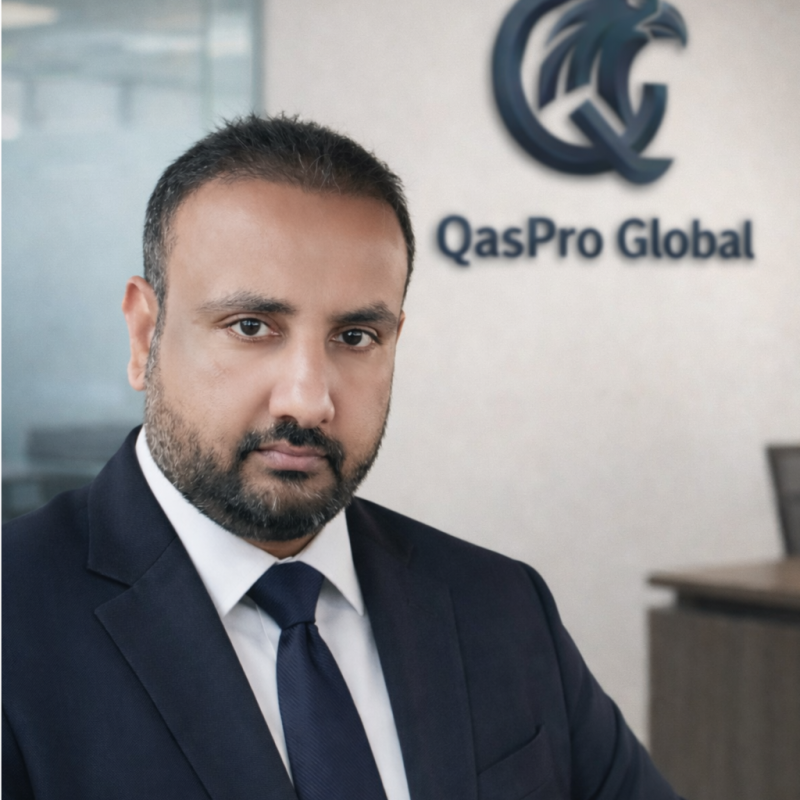
Founder & CEO, Qaspro Global — UAE tax expert with 16+ years of experience in VAT, corporate tax and FTA audit support.