
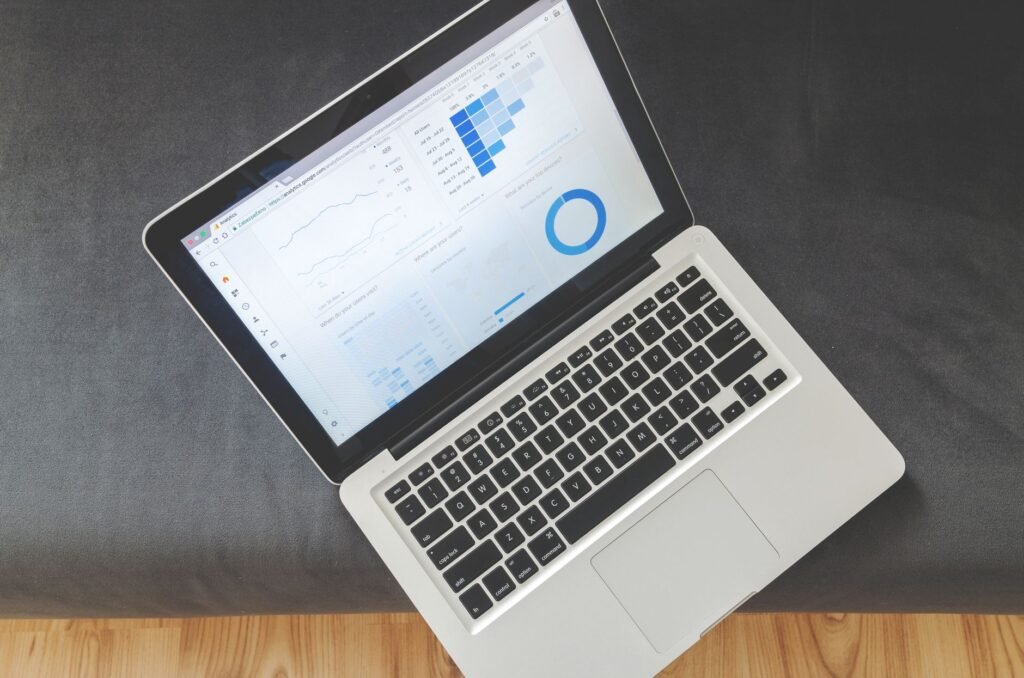
Most UAE business owners know their sales roughly. Far fewer can say, at 9 am on a normal Tuesday, how much cash the business really has, who owes it money, what bills fall due this week and whether this month is ahead of last month. The answers exist somewhere: in the bank app, in a spreadsheet, in the accountant’s inbox, in a pile of unposted invoices. They just do not arrive in one place, on time, in plain words.
This guide explains the 5 numbers worth checking in 2 minutes every morning, why most owners do not get them today, which parts of the work automation can take over, and what your qualified accountant must still decide. It is written for owners, not for finance teams. For the wider picture, see our hub page on AI accounting automation in the UAE.
Published: 1 November 2026
Quick Answer
A 2-minute owner dashboard shows 5 numbers: (1) cash in the bank today and the outlook for the next 30 days, (2) money customers owe you and how much is overdue, (3) bills you must pay this week, (4) profit so far this month against last month, and (5) money tied up in stock or unfinished work. Automation can keep these numbers fresh every day by reading bank feeds and capturing transactions. A qualified accountant still reviews the figures, decides the judgement calls and signs off, so the numbers can be trusted.
Why 2 Minutes Is the Right Target
An owner does not need a 40-page report in the morning. An owner needs to know if anything needs action today. Two minutes is enough to scan five numbers and spot one that looks wrong. If a number looks wrong, the owner can then ask a specific question, instead of waiting for a monthly pack that arrives three weeks after the problem started.
The aim is speed of decision, not volume of data. A short, reliable view that you actually open beats a detailed report that sits unread.
The 5 Numbers, One by One
1. Cash in the bank today, and the next 30 days
Direct answer: this is the money you can actually spend today, plus a simple view of what is expected in and out over the next 30 days.
Cash is the number that decides whether you can pay salaries, rent and suppliers on time. Profit on paper does not pay anyone. A business can be profitable and still run short of cash, for example when customers pay late while suppliers want payment now.
What the owner should see: the balance across each bank account, and a short list of known money coming in and going out over the next 30 days. The outlook is an estimate based on invoices and bills already recorded, so it is only as good as how up to date the records are.
2. Money owed to you, and how much is overdue
Direct answer: this is the total your customers owe you, split into not yet due and overdue, with the oldest items on top.
Overdue invoices quietly drain a business. The older an unpaid invoice gets, the harder it usually is to collect. Seeing the overdue total and the three or four largest names each morning lets the owner make one phone call that matters instead of discovering the problem at month end.
3. Bills due this week
Direct answer: this is the list of supplier bills, rent, utilities and other commitments that fall due in the next 7 days.
Missing a payment can mean late fees, strained supplier relations or a stopped delivery. Seeing the week ahead lets you decide which bills to pay now and which can wait, based on the cash number above. The decision stays with the owner. The list simply makes sure nothing is a surprise.
4. Profit this month so far, against last month
Direct answer: this is a rough running profit for the current month, set beside the same point last month.
A running profit figure is useful for direction, not precision. It tells the owner whether this month is tracking ahead or behind. It will move at month end when the accountant posts adjustments such as accruals and prepayments, so treat it as a guide until the books are closed. Our guide on closing the month in 2 days instead of 10 explains why those final adjustments matter.
5. Money tied up in stock or unfinished work
Direct answer: this is the value of goods sitting in the warehouse or jobs started but not yet billed.
For a trading business this is stock. For a service or contracting business it is work in progress. In both cases it is cash that has left the bank and not yet come back. A one-line example: a trading company with AED 400,000 of slow-moving stock has less cash flexibility than its bank balance suggests. Seeing the number each morning keeps the question of “what is stuck?” in front of the owner.
Why Most Owners Do Not Get These Numbers Today
In our experience of working with UAE businesses, the same four causes appear again and again.
- Books are updated weeks late. Invoices and receipts are entered in batches, so the numbers describe the past, not today.
- The numbers live in different places. Bank balances are in one app, invoices in another system, stock in a spreadsheet, bills in an email folder.
- The owner waits for the accountant. The monthly report arrives after the month is over, when it is too late to change anything.
- The report is not built for decisions. Pages of ledger detail hide the five things the owner actually needs.
None of this is a failure of effort. It is the result of doing routine data entry by hand and assembling the picture manually.
What Automation Can Take Over
Routine, repetitive steps are where automation helps most. For an owner dashboard, the parts that can be automated are:
- Bank feeds. Bank transactions are pulled in daily instead of being typed in or uploaded at month end. This keeps the cash number current. Our guide on bank reconciliation automation in the UAE covers how matching works and where human checks stay.
- Transaction capture and coding suggestions. Supplier bills and receipts can be read and a suggested account proposed, which reduces typing and speeds up posting.
- An auto-refreshing dashboard. Once the data is current, the five numbers can refresh on their own every morning.
- Overdue and due-date alerts. The owner can be alerted when an invoice passes its due date or a large bill is approaching, without having to hunt for it.
AI does the routine work. Qaspro’s qualified accountants review the output and sign off before you rely on it.
What Your Qualified Accountant Still Decides
Automation produces suggestions and fresh data. It does not carry professional responsibility. These tasks should stay with a qualified accountant:
- Accruals and prepayments. Deciding which costs belong in which month.
- Classification disputes. Whether a payment is an expense, an asset, a loan or an owner’s withdrawal.
- Review of unusual items. A large or odd transaction that a machine cannot explain.
- Sign-off. Confirming the numbers are complete and reasonable before they are used for decisions, lenders or filings.
- Interpretation. Explaining what the numbers mean for the business and what to do next.
For a refresher on what must be recorded in the first place, see bookkeeping requirements for UAE businesses and the monthly bookkeeping checklist.
Before and After: Hours, Error Risk and Cost
The table below compares a typical manual approach with an automated approach with accountant review. The AED figures are a hypothetical illustration based on stated assumptions. They are not a quote, a promise or a measured result for any specific business.
Assumptions for the illustration: the owner or a manager spends 6 hours a week gathering and checking numbers by hand; their time is valued at AED 150 per hour; the same weekly check takes 1 hour once the figures refresh automatically; there are 52 weeks in a year.
| Item | Before (manual) | After (automated, reviewed) |
|---|---|---|
| Hours per week gathering numbers | 6 hours | 1 hour |
| Value of time at assumed AED 150/hour, per week | AED 900 | AED 150 |
| Value of time per year (52 weeks) | AED 46,800 | AED 7,800 |
| Illustrative time value freed per year | AED 39,000 (5 hours x AED 150 x 52 weeks) | |
| Age of the numbers you see | Days to weeks old | Updated daily |
| Risk of typing and copy errors | Higher, many manual steps | Lower, with accountant review of exceptions |
| Overdue invoices noticed | At month end or later | As soon as they pass the due date |
Change the assumptions to match your own business. If your time is worth more, or you spend fewer hours, the result changes. The point of the illustration is the method: count the hours, value them honestly, and compare.
The Hidden Cost of Not Looking
The cost of not seeing your numbers rarely appears as a line in the accounts. It shows up as events:
- Late supplier payments because nobody noticed the due date, followed by late fees or a strained relationship.
- A surprise cash shortfall at the end of the month because a large bill and a late customer payment landed together.
- Overdue invoices ageing from 30 days to 90 days while the owner assumed customers would pay.
- Decisions on stale data, such as hiring, buying stock or signing a lease based on last quarter’s picture.
Each of these is avoidable with a 2-minute look. That is the real argument for an owner dashboard. It is not about prettier reports. It is about catching a problem on day 3 instead of day 33.
Risks and Controls to Demand
An automated dashboard is only useful if you can trust it. Ask for these controls from any provider, including us.
- Human review. A qualified accountant reviews exceptions and signs off. Automation without review can spread an error faster.
- An audit trail. Every figure should trace back to the bank line, invoice or journal behind it, so you can see why a number is what it is.
- Data security. Bank and customer data should be protected with access controls and secure storage.
- UAE data protection. Personal data of customers and staff falls under the UAE Personal Data Protection Law (Federal Decree-Law No. 45 of 2021). Ask how the provider handles it.
- Clear access. You should know exactly who can see the dashboard and who can change data, and be able to remove access when someone leaves.
Owner Checklist: Questions to Ask Any Provider
- Which of my five numbers will I see, and how often do they refresh?
- Where does each number come from, and can I trace it to the source record?
- Which steps are automated, and which are reviewed by a qualified accountant?
- Who signs off the figures, and how do I know when the books are closed?
- What happens when the automation is wrong or unsure?
- Where is my data stored, and who can see it?
- How do you handle UAE personal data requirements?
- What do I have to do each week to keep the numbers accurate?
If a provider cannot answer these plainly, the dashboard is not ready to be trusted with decisions.
Frequently Asked Questions
What are the 5 numbers an owner should check each morning?
Cash in the bank and the 30-day outlook, money owed to you and what is overdue, bills due this week, profit this month so far against last month, and money tied up in stock or unfinished work.
Is an owner dashboard the same as a full financial report?
No. A dashboard is a short view for daily decisions. A full financial report is prepared after the books are reviewed and closed, and is used for sign-off, lenders and filings.
Can profit on the dashboard be trusted before month end?
Treat it as a guide to direction. Adjustments such as accruals and prepayments are normally made when the month is closed, so the final figure can differ.
Which parts can automation really handle?
Pulling in bank transactions, capturing bills and receipts, suggesting account codes, refreshing the numbers daily and sending overdue or due-date alerts.
What must a qualified accountant still do?
Review unusual items, decide accruals and classification questions, sign off the figures and explain what they mean for the business.
Will an owner dashboard replace my accountant?
No. It gives you faster visibility. Judgement, sign-off and professional responsibility stay with a qualified accountant.
How accurate is the 30-day cash outlook?
It is an estimate based on invoices and bills already recorded and their due dates. Unrecorded items and late payments will change it, so keep the records current.
How much time can an owner save?
It depends on your current process. In our hypothetical illustration, cutting 6 hours a week to 1 hour frees 5 hours a week. Use your own hours and your own hourly value to test it.
Is my business data safe in an automated system?
Safety depends on the provider’s controls. Ask about access rights, secure storage, audit trails and how UAE personal data requirements are handled.
Do I need new software to get a dashboard?
Not always. Many businesses already have accounting records and bank accounts that can feed a dashboard. What matters is that the records are current and reviewed.
Related Reading
- AI accounting automation in the UAE
- Month-end close in 2 days instead of 10
- Bank reconciliation automation in the UAE
- Monthly bookkeeping checklist for the UAE
- Bookkeeping requirements for UAE businesses
- AI accounting automation for trading and e-commerce
Next Step
If you want to see which of these five numbers you could have in front of you every morning, message us on WhatsApp at wa.me/971551539679. To understand how automation fits alongside accountant review, start with our hub on AI accounting automation in the UAE. If you also manage staff, our sister site Yalah Dubai explains UAE working hours, rest breaks and Ramadan hours.

Founder & CEO, Qaspro Global — UAE tax expert with 16+ years of experience in VAT, corporate tax and FTA audit support.