
Published: 8 October 2026
Quick answer: the “Abu Dhabi Ports Company (ADPC) free zone” at Khalifa Port is the zone many consultants still list under its old name. Today it is run inside KEZAD Group, which belongs to AD Ports Group. A company there can hold an industrial, trading or service licence, with 100% foreign ownership. For UAE corporate tax, the 0% rate is not automatic. It applies only to the Qualifying Income of a Qualifying Free Zone Person, tested under Cabinet Decision No. 100 of 2023 and Ministerial Decision No. 229 of 2025. Everything else is taxed at 9%.
If you plan to import, store, trade, process or move cargo through Abu Dhabi, this guide explains how the zone works, which licence fits which business, how to set up, and how to protect the 0% tax position.
What is the ADPC free zone at Khalifa Port?
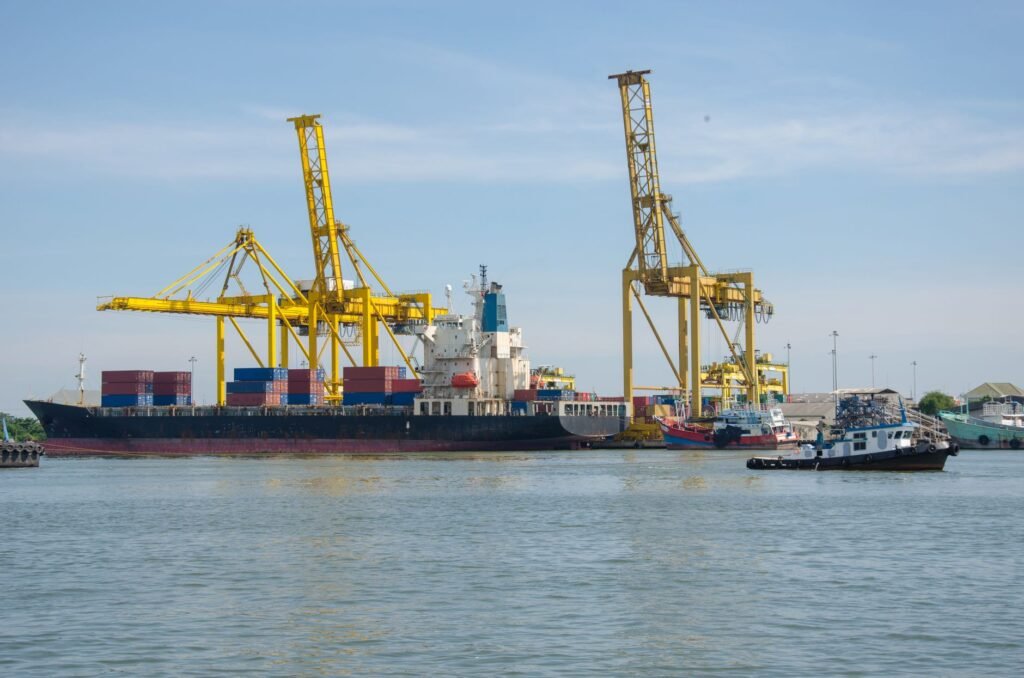
Direct answer: it is the free trade zone next to Khalifa Port in Abu Dhabi, historically operated by Abu Dhabi Ports Company (ADPC), now part of AD Ports Group and its KEZAD Group business.
Abu Dhabi Ports Company became AD Ports Group, which is listed on the Abu Dhabi Securities Exchange under the ticker ADPORTS. KEZAD Group is part of the group’s Economic Cities and Free Zones cluster. According to AD Ports Group, that cluster covers 550 square kilometres of land and serves over 2,300 customers, as a hub for manufacturing, logistics and trade. Khalifa Port itself is described by the group as the first semi-automated port in the region, connected to more than 70 destination ports.
Why does this matter for naming? Many older websites, directories and consultant pages still say “ADPC free zone”, “KIZAD” or “Khalifa Port Free Trade Zone”. When you apply, you deal with KEZAD Group, and your licence documents will show the current issuing authority. Always check the name on the licence, because the same name appears on your tax registration, bank KYC and customs files.
Our separate guide to KEZAD company setup covers the wider KEZAD offer. This article stays focused on the Khalifa Port side: what trading and logistics companies get, and how corporate tax applies to them.
Who is this free zone best suited for?
Direct answer: companies whose business is physical goods: importers, exporters, distributors, manufacturers, processors and logistics operators.
KEZAD Group lists seven focus sectors: automotive, food processing, life science, logistics, metals, polymers and specialty chemicals. Facilities it advertises include serviced land plots, pre-built warehouses, build-to-suit facilities and start-up office solutions.
A good fit looks like this:
- A trading company that imports goods into Abu Dhabi and re-exports them to GCC, Africa or Asia.
- A manufacturer that needs a plot, utilities and port access.
- A logistics or freight business that stores and moves cargo for clients.
- A food, chemical or metals business that depends on short distance between ship and warehouse.
A poor fit looks like this:
- A consulting or design business that serves UAE customers face to face. An office-based zone or mainland licence is usually simpler.
- A business that plans to sell mostly to UAE consumers. Free zone companies cannot freely trade onshore without the right permit or a mainland route. Read free zone to mainland expansion before you commit.
Licence types at KEZAD Group
Direct answer: three main types: industrial, trading (including general trading) and service.
KEZAD Group describes them on its licence-type page as follows:
| Licence | What KEZAD says it permits |
|---|---|
| Industrial licence | Import of raw material, manufacturing, processing, assembling, packaging and export of intermediate or finished products |
| Trading licence | Import, export, distribution, stocking and warehousing of products and items listed on the licence |
| Service licence | Service activities such as management and economic consulting, marketing and logistical support, including cargo forwarding, restaurants and travel agencies, from the published category lists |
A General Trading Licence applies where the products listed exceed 17 items or the product groups exceed three, according to KEZAD.
Practical points when choosing:
- Match the licence to the real activity. If you manufacture, you need the industrial licence even if you also trade the product. A trading licence will not cover production.
- Check the activity list before you apply. Each licence is limited to the activities printed on it. Adding an activity later needs an amendment.
- Think about tax at the same time. The licence type affects whether your income can fall inside the 0% regime. A service licence for “logistical support” is not the same thing for tax as a “logistics services” qualifying activity. See the tax section below.
Permitted activities: what you can and cannot do
Direct answer: you can only carry out the activities on your licence, and only inside the zone’s terms. Selling to onshore UAE customers needs extra steps.
Typical permitted activity families:
- Importing, stocking, warehousing and distributing goods.
- Re-exporting goods to other countries.
- Manufacturing, assembling, processing and packaging.
- Cargo forwarding, storage and logistical support.
Things that need extra care:
- Onshore sales. If you want to supply customers outside the free zone, you need either a permit from the Abu Dhabi Department of Economic Development (ADDED), a mainland branch, or a local distributor. Do not assume your free zone licence covers mainland sales.
- Regulated products. Food, chemicals, medical goods and similar items need approvals from the relevant authorities, on top of your licence.
- Industrial licences. KEZAD’s own document list for industrial applications can include technical and environmental assessments, so timelines are longer than for a simple trading licence.
For a comparison with a mainland route in Abu Dhabi, see our Tajer licence guide, which suits small online and home-based traders rather than port-based industrial operators.
Step by step: how to set up
Direct answer: choose activity and licence, prepare documents, apply to KEZAD Group, pay, receive the licence, then register for corporate tax and VAT as needed.
- Define the activity. Write down what you will import, make or store, who buys it and where it is sold. This decides licence type, facility type and tax result.
- Choose the facility. Options include flexi office, warehouse unit or land plot. Your lease must fit your activity and stock volume.
- Prepare documents. Typical items are passport copies, an application form, a business plan, any external approvals, and a No Objection Certificate (NOC) if a foreign shareholder already holds a UAE residence visa through another sponsor. Corporate shareholders provide company documents, attested where required.
- Submit and pay. Apply through KEZAD Group, pay the published licence and registration fees, and sign the lease.
- Receive the licence and establishment card. After this you can open a bank account, apply for visas and register with customs.
- Register for corporate tax. Every free zone company must register, even if it expects 0%. See corporate tax registration for free zone companies.
- Register for VAT if required. The 5% VAT rules for goods and designated zones are explained below.
KEZAD says straightforward applications with complete paperwork can move quickly, while industrial licences may take longer. Confirm timing and current fees directly with KEZAD Group. Fee tables on consultant websites are often years old, so we do not quote any here.
Visas, offices and warehouses
Direct answer: the number of visas is linked to the size of your facility, and you should check the quota before you hire.
- Visas. Free zone companies sponsor their own employees and owners. The quota depends on the lease type and area. Underestimating visa needs is one of the most common setup mistakes.
- Office. A flexi desk is enough for a purely paper-based trading business, but the activity must still be genuinely carried out. Physical presence rules for free zone offices are being enforced. Read our note on free zone office reinstatement and physical presence.
- Warehouse and plot. KEZAD advertises pre-built warehouses, serviced land and build-to-suit options. Your lease area also supports the “adequate substance” requirement for tax, covered next.
- Golden Visa packages. KEZAD advertises Golden Visa packages for eligible investors. Eligibility is decided by the visa authorities, not by the zone.
Corporate tax position: 0% or 9%?
Direct answer: a KEZAD company pays 0% only on Qualifying Income and only if it is a Qualifying Free Zone Person (QFZP). Other income is taxed at 9%. If the company fails the conditions, it can lose QFZP status for the year and the next four tax periods.
This is the part most setup brochures simplify. The free zone licence does not itself give a tax rate. The Federal Tax Authority treats the 0% rate as a regime you must qualify for each tax period.
The conditions for QFZP status
A free zone person must, in each tax period:
- Maintain adequate substance in the UAE free zone. In practice this means real staff, premises and decision making that match the activity.
- Derive Qualifying Income as defined in Cabinet Decision No. 100 of 2023.
- Meet the de minimis rule: non-qualifying revenue must not exceed the lower of 5% of total revenue or AED 5 million for the period.
- Prepare audited financial statements.
- Not have made the election to be taxed at the standard rates.
- Comply with transfer pricing rules.
Our full explainers are here: QFZP corporate tax guide and qualifying income.
Qualifying activities under MD 229 of 2025
Ministerial Decision No. 229 of 2025 replaced Ministerial Decision No. 265 of 2023, was issued on 28 August 2025 and applies from 1 June 2023. Older guides, including some consultant pages about the ADPC zone, still quote MD 265, so check the date of any source you rely on.
The qualifying list is closed. The items most relevant to a Khalifa Port business are:
- Manufacturing of goods or materials, and processing of goods or materials.
- Trading of Qualifying Commodities. Retail-packaged goods do not count as commodity trading, and there is a 51% guardrail: commodity trading cannot be treated as a Qualifying Activity if 51% or more of total revenue comes from distribution, warehousing, logistics or inventory management.
- Distribution of goods or materials in or from a Designated Zone. The goods must be imported through that Designated Zone and supplied to another person for resale, processing or alteration.
- Logistics services. Storage and transportation of goods without taking title.
- Activities ancillary to the above.
Our detailed note is at MD 229 qualifying activities.
Excluded activities: the usual trap
Excluded Activities are not Qualifying Income. They include transactions with natural persons (with limited exceptions), banking and most insurance, most finance and leasing, and ownership or exploitation of immovable property, subject to listed exceptions. Selling goods directly to individual consumers is the classic problem for a trading company, so check your customer mix. See free zone excluded activities.
Worked examples (illustrative, not advice)
- A manufacturer that makes polymer products at KEZAD and sells to other businesses. Manufacturing is a qualifying activity. Sales to other free zone persons and to mainland businesses can be Qualifying Income if the activity is qualifying and not excluded. Substance and audited accounts still apply.
- A trader that imports building materials and sells to mainland contractors. Whether the income qualifies depends on whether the goods are Qualifying Commodities or distribution from a Designated Zone, and on the 51% test. A general trading company often ends up with a mix of qualifying and non-qualifying revenue.
- A freight forwarder providing storage to clients without taking title. Logistics services can qualify independently. If the same company also sells goods to consumers, those sales could breach the de minimis limit.
In every case the answer depends on facts, contracts and revenue splits, so test each revenue stream, not the company as a whole.
Consequences of losing QFZP status
If a QFZP fails a condition, it stops being a QFZP from the start of that tax period and for the following four tax periods, and is taxed at the standard rates. This is why monthly revenue tracking by customer type is worth the effort.
VAT and the Designated Zone question
Direct answer: VAT and corporate tax use different lists. Being a “Designated Zone” for VAT does not make you a QFZP for corporate tax.
For VAT, certain free zones are Designated Zones under Cabinet Decision No. 59 of 2017. Secondary sources list Khalifa Port Free Trade Zone among the Abu Dhabi entries, next to Abu Dhabi Airport Free Zone and KIZAD. The Cabinet can amend the list and a business cannot decide for itself whether it is in one. Check the current list published by the Federal Tax Authority before you structure invoices.
What this means in practice:
- Movement of goods between Designated Zones can be outside VAT if the conditions are met.
- Services supplied within or from a Designated Zone are generally subject to 5% VAT.
- Goods released into the mainland are subject to import treatment at the border.
Read our guides on free zone VAT and UAE customs duty for the details.
Khalifa Port zone vs other Abu Dhabi options
| Option | Best for | Main limit |
|---|---|---|
| KEZAD / Khalifa Port zone | Industrial, trading and logistics with port access | Onshore sales need an extra permit or route |
| ADGM | Financial and professional services | Not built for warehousing or cargo |
| ADAFZ | Air cargo and airport-linked businesses | Airport focus rather than sea freight |
| Tajer licence | Small mainland traders and online sellers | Not a free zone, no QFZP regime |
| Dubai alternatives such as JAFZA | Dubai-based port-linked trading | Different authority and location |
If your suppliers and customers are in Abu Dhabi, Khalifa Port saves trucking and handling. If your customers are mostly in Dubai, compare the real delivery routes before choosing.
Common mistakes to avoid
- Using the wrong or an outdated zone name on bank and tax forms.
- Taking a trading licence when the business actually manufactures.
- Assuming the 0% rate applies to all income.
- Ignoring the de minimis limit when selling to individuals.
- Forgetting corporate tax registration, which attracts penalties if missed.
- Quoting MD 265 of 2023 instead of MD 229 of 2025.
- Not keeping audited financial statements.
- Having no real substance: no staff, no premises, no decision making in the zone.
Checklist before you apply
- Written description of every activity and product.
- Customer map: free zone persons, mainland businesses, foreign customers, individuals.
- Expected revenue split by customer type.
- Licence type and facility chosen.
- Visa quota confirmed.
- Approvals identified for regulated goods.
- Plan for audited accounts and corporate tax registration.
Frequently asked questions
Is the ADPC free zone still called that?
Mostly no. Many websites still use ADPC, KIZAD or Khalifa Port Free Trade Zone, but the zone is operated within KEZAD Group, part of AD Ports Group. Check the issuing authority name on your licence.
Can a foreign investor own 100% of a company there?
Yes. KEZAD Group states that free zone licences are available with 100% foreign ownership. Check any sector-specific approvals.
What licence types are available?
Industrial, trading (including general trading) and service licences, as described by KEZAD Group.
Do I pay 0% corporate tax automatically?
No. You pay 0% only on Qualifying Income and only if you are a Qualifying Free Zone Person. Other income is taxed at 9%.
Which decision lists the qualifying activities now?
Ministerial Decision No. 229 of 2025, issued on 28 August 2025 and applying from 1 June 2023. It replaced Ministerial Decision No. 265 of 2023.
Does a free zone company need audited accounts?
A company that wants to be a QFZP must prepare audited financial statements. Many free zone authorities also require them for licence renewal.
Can I sell to customers in mainland Abu Dhabi?
Not freely on a free zone licence alone. You need an ADDED permit, a mainland branch or a distributor, and you must consider the tax effect of those sales.
Is Khalifa Port zone a Designated Zone for VAT?
Secondary sources list it under Cabinet Decision No. 59 of 2017, but the list can change. Check the current Federal Tax Authority list and do not rely on a consultant page.
What happens if I fail the de minimis test?
You lose QFZP status from the start of that tax period and for the next four tax periods, and your income is taxed at the standard rates.
How long does setup take?
KEZAD says simple applications with complete paperwork can be quick, while industrial licences can take longer. Confirm with KEZAD Group for your case.
Sources
- AD Ports Group and KEZAD Group official websites (adportsgroup.com, kezadgroup.com), including the KEZAD licence type page.
- UAE Ministry of Finance: Ministerial Decision No. 229 of 2025 on Qualifying Activities and Excluded Activities.
- Cabinet Decision No. 100 of 2023 on Qualifying Income.
- Cabinet Decision No. 59 of 2017 on Designated Zones, via the Federal Tax Authority.
- Federal Tax Authority: Free Zone Persons Corporate Tax Guide (tax.gov.ae).
Facts on this page were checked against these sources on 7 October 2026. Fees, licence names and tax rules change, so verify current figures with the authority before you act.
Trading and logistics companies at Khalifa Port regularly invite overseas buyers, suppliers and auditors to the UAE for meetings and site visits. Our sister site Yalah Dubai explains how to bring them in correctly in its guide to the UAE business visit visa, including who can sponsor and what the visitor may do.
Related reading
- UAE Business Visit Visa 2026 (Yalah Dubai)
- KEZAD company setup in Abu Dhabi
- QFZP corporate tax guide
- MD 229 qualifying activities
- Free zone excluded activities
- Mainland vs free zone tax
- ADAFZ airport free zone
- Tajer licence Abu Dhabi
Need help checking whether your free zone income can qualify for 0%? Message Qaspro on WhatsApp: https://wa.me/971551539679
Founder & CEO, Qaspro Global — UAE tax expert with 16+ years of experience in VAT, corporate tax and FTA audit support.